
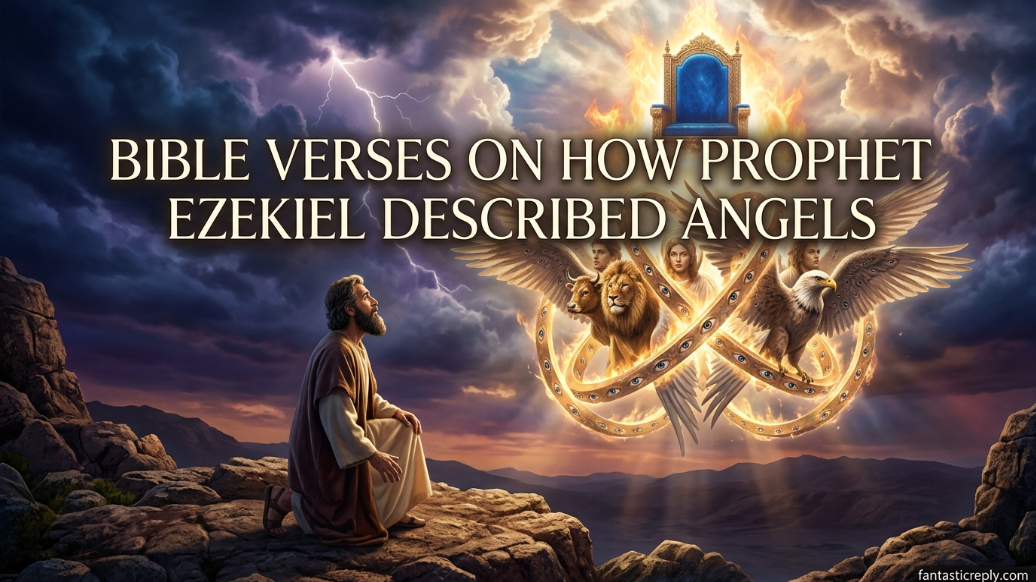
The Bible contains many breathtaking descriptions of heavenly beings, but few are as vivid and mysterious as the visions given to the prophet Ezekiel. His encounters with angels and God’s heavenly throne have fascinated readers for centuries. Many Christians wonder what Ezekiel actually saw, why the angels looked so unusual, and what these extraordinary visions reveal about God’s glory.
Ezekiel ministered during one of Israel’s darkest periods—the Babylonian exile. Far from Jerusalem and surrounded by uncertainty, God opened the heavens and gave him remarkable visions that reminded His people that God’s presence was not confined to a temple or a nation. Among these visions were powerful angelic beings unlike anything described elsewhere in Scripture. With multiple faces, wings, shining appearances, and movements directed by God’s Spirit, these heavenly creatures displayed God’s holiness, power, wisdom, and sovereign rule over creation.
Studying Bible Verses on How Prophet Ezekiel Described Angels helps us appreciate the majesty of God while deepening our understanding of the spiritual world. These passages also remind believers that God’s heavenly servants faithfully accomplish His purposes and that the Lord remains in complete control, even during life’s most difficult seasons.
Quick Answer
The Bible verses on how Prophet Ezekiel described angels primarily come from Ezekiel chapters 1 and 10. Ezekiel saw living creatures (often identified with cherubim) that had four faces, four wings, straight legs, shining like polished bronze, and moving wherever God’s Spirit directed them. He also described wheels full of eyes beside them, symbolizing God’s perfect knowledge and sovereign authority. These visions emphasize God’s holiness, glory, wisdom, and power rather than encouraging believers to focus on the physical appearance of angels. Ezekiel’s descriptions remind Christians that heavenly beings exist to worship and serve God while carrying out His divine purposes.
What Does the Bible Say About How Prophet Ezekiel Described Angels?
Ezekiel’s visions are among the most detailed descriptions of heavenly beings found anywhere in Scripture. While many people picture angels with two wings and human appearances, Ezekiel’s vision reveals something much more majestic and symbolic.
The living creatures Ezekiel saw are later identified as cherubim (Ezekiel 10:20). Throughout the Old Testament, cherubim are closely associated with God’s throne and His holy presence. They are not ordinary angels but powerful heavenly beings who continually serve before the Lord.
Several themes emerge from Ezekiel’s descriptions:
- God’s glory surpasses human understanding.
- Angels faithfully carry out God’s commands.
- God’s Spirit directs every movement.
- Heaven operates with perfect order.
- God’s authority extends over all creation.
Rather than satisfying human curiosity about angels, Ezekiel’s vision directs attention toward God’s greatness. Every detail points back to His holiness, wisdom, and sovereignty.
Bible Verses on How Prophet Ezekiel Described Angels
The Appearance of the Living Creatures
Ezekiel 1:4–5
Verse
“I looked, and I saw a windstorm coming out of the north… and in the fire was what looked like four living creatures.”
Meaning and Biblical Context
Ezekiel’s vision begins with a dramatic display of God’s glory. Before describing the living creatures, he witnesses a storm cloud, flashing fire, and brilliant light. These signs often symbolize God’s majestic presence throughout Scripture. The four living creatures emerge from this overwhelming display, showing that they serve in God’s immediate presence. Their appearance reminds readers that heaven is far more glorious than anything humans can fully comprehend.
Practical Life Application
Approach God with reverence and humility. His holiness deserves our worship more than our curiosity about heavenly beings.
Why This Verse Still Matters Today
This vision reminds believers that God remains glorious, powerful, and actively ruling over His creation.
Ezekiel 1:6
Verse
“Each of the four had four faces and four wings.”
Meaning and Biblical Context
The four faces symbolize different aspects of God’s creation and authority. Traditionally, the faces represent humanity (man), strength (lion), service (ox), and swiftness (eagle). Together they portray God’s dominion over every part of creation. Their four wings demonstrate readiness to serve and carry out God’s commands without delay.
Practical Life Application
God calls His people to serve Him wholeheartedly with obedience and willingness.
Why This Verse Still Matters Today
Faithful service remains one of the defining characteristics of those who follow God.
Their Brilliant Appearance
Ezekiel 1:7
Verse
“Their legs were straight; their feet were like those of a calf and gleamed like burnished bronze.”
Meaning and Biblical Context
The straight legs symbolize stability and unwavering purpose. Bronze throughout Scripture often represents strength, judgment, and purity. Every detail of Ezekiel’s description emphasizes perfection rather than weakness. These heavenly beings never stumble because they perfectly fulfill God’s will.
Practical Life Application
Ask God to give you steadfast faith that remains firm during every circumstance.
Why This Verse Still Matters Today
Believers can depend on God’s strength when facing life’s uncertainties.
Ezekiel 1:13–14
Verse
“The creatures sped back and forth like flashes of lightning.”
Meaning and Biblical Context
The rapid movement of the cherubim illustrates immediate obedience. They never hesitate when carrying out God’s commands. Lightning also symbolizes divine power and majesty throughout Scripture.
Practical Life Application
Respond quickly when God calls you to obey instead of delaying His work.
Why This Verse Still Matters Today
God still desires willing hearts that obey without hesitation.
Guided Completely by God’s Spirit
Ezekiel 1:20
Verse
“Wherever the spirit would go, they would go.”
Meaning and Biblical Context
One of the most important lessons in Ezekiel’s vision is that the living creatures never move independently. Every action follows God’s Spirit. Their perfect unity demonstrates complete submission to God’s authority.
Practical Life Application
Allow the Holy Spirit to direct your decisions instead of relying solely on personal understanding.
Why This Verse Still Matters Today
A Spirit-led life produces wisdom, peace, and faithful obedience.
Ezekiel 1:18
Verse
“Their rims were high and awesome, and all four rims were full of eyes all around.”
Meaning and Biblical Context
The mysterious wheels covered with eyes symbolize God’s complete knowledge. Nothing escapes His attention. The wheels also represent God’s throne moving throughout creation, demonstrating His universal reign.
Practical Life Application
Trust that God sees every detail of your life, even those hidden from others.
Why This Verse Still Matters Today
God’s perfect knowledge gives believers confidence during uncertain times.
Ezekiel Identifies Them as Cherubim
Ezekiel 10:20
Verse
“These were the living creatures I had seen beneath the God of Israel by the Kebar River, and I realized that they were cherubim.”
Meaning and Biblical Context
Later in his ministry, Ezekiel identifies the living creatures as cherubim. This clarification helps readers understand that these heavenly beings continually surround God’s throne. Cherubim are consistently associated with God’s holiness, glory, and protection throughout the Bible.
Practical Life Application
Remember that heaven constantly worships God, inviting believers to join in wholehearted praise.
Why This Verse Still Matters Today
God alone deserves the worship of both heaven and earth.
Ezekiel 10:12
Verse
“Their entire bodies… were completely full of eyes.”
Meaning and Biblical Context
The repeated emphasis on eyes reinforces God’s all-seeing wisdom. The cherubim serve the God who misses nothing. His justice is perfect because His knowledge is complete.
Practical Life Application
Live with integrity, knowing that God sees both public actions and private motives.
Why This Verse Still Matters Today
God’s perfect awareness brings both accountability and comfort.
God’s Glory Above the Angels
Ezekiel 1:26–28
Verse
“Above the vault over their heads was what looked like a throne… This was the appearance of the likeness of the glory of the Lord.”
Meaning and Biblical Context
The climax of Ezekiel’s vision is not the angels—it is God Himself. Above the cherubim sits the glorious throne of the Lord. Ezekiel falls face down in worship because God’s glory surpasses everything else he has seen.
Practical Life Application
Never let fascination with angels distract you from worshiping God alone.
Why This Verse Still Matters Today
The ultimate purpose of every biblical vision is to reveal God’s greatness rather than glorify His creation.
How to Apply These Bible Verses in Daily Life
Ezekiel’s visions are not merely fascinating descriptions of heavenly beings—they also teach valuable spiritual lessons for everyday Christian living.
- Worship God with reverence and awe.
- Trust God’s sovereign control over every situation.
- Follow the Holy Spirit’s leading faithfully.
- Serve God with wholehearted obedience.
- Remember that God sees everything with perfect wisdom.
- Focus on God’s glory rather than becoming overly fascinated with angels.
- Live with integrity because nothing is hidden from the Lord.
- Find peace knowing that heaven operates according to God’s perfect plan.
Heartfelt Prayer
Heavenly Father,
Thank You for revealing Your greatness through the visions You gave to the prophet Ezekiel. As I read about the heavenly beings who continually serve and worship You, help me remember that You alone are worthy of all honor, glory, and praise.
Teach me to live with the same obedience shown by Your heavenly servants. Guide my steps through Your Holy Spirit, strengthen my faith, and help me trust Your perfect wisdom even when I do not understand Your plans.
May my life reflect reverence for Your holiness and confidence in Your sovereign care. Keep my eyes fixed on You above all else, and let my worship bring glory to Your name.
In Jesus’ name,
Amen.
FQAs
Did Ezekiel actually see angels?
Yes. Ezekiel received divine visions from God that included heavenly beings identified as cherubim in Ezekiel 10:20.
What kind of angels did Ezekiel describe?
He described cherubim—powerful heavenly beings associated with God’s throne and His holy presence.
Why did the angels have four faces?
The four faces symbolize different aspects of God’s creation, authority, strength, wisdom, service, and majesty.
What do the wheels full of eyes represent?
They symbolize God’s complete knowledge, perfect awareness, and sovereign rule over all creation.
Why were the angels able to move in every direction?
Because they were directed entirely by God’s Spirit and never acted independently.
Are Ezekiel’s angels the same as ordinary angels?
They are specifically identified as cherubim, a distinct class of heavenly beings closely connected to God’s throne.
What is the main lesson from Ezekiel’s vision?
The central message is God’s unmatched glory, holiness, sovereignty, and authority over heaven and earth.
Should Christians focus on studying angels?
The Bible encourages believers to appreciate God’s heavenly servants while keeping their primary focus on worshiping God Himself.
Why are Ezekiel’s descriptions so symbolic?
The symbolic imagery communicates spiritual truths about God’s greatness that human language alone cannot fully express.
Conclusion
The Bible verses on how Prophet Ezekiel described angels reveal far more than unusual heavenly creatures—they reveal the majesty of God Himself. Ezekiel’s visions remind us that God reigns with perfect wisdom, power, and holiness, while His heavenly servants faithfully carry out His will. As we study these remarkable passages, may our greatest response be deeper worship, stronger faith, and greater trust in the Lord whose glory fills both heaven and earth.
